
The Sennheiser MKE 600 takes our top spot for its unmatched off-axis noise rejection and broadcast-grade audio clarity. It remains the most reliable choice for creators needing professional results in unpredictable environments.
| Product | Award | Key Specs | Rating | Amazon |
|---|---|---|---|---|
| Sennheiser MKE 600 | Best Overall | Battery/Phantom | 4.9 | Check Price |
| Rode VideoMic NTG | Best Versatility | USB-C/3.5mm | 4.8 | Check Price |
| Deity V-Mic D3 Pro | Best Battery Life | Auto-On/Off | 4.7 | Check Price |
| Audio-Technica AT875R | Best Pro Value | Phantom Only | 4.8 | Check Price |
| Shure VP83 LensHopper | Best Durability | Integrated Shock | 4.7 | Check Price |
| Rode VideoMic Pro+ | Best Auto-Power | Li-ion Battery | 4.8 | Check Price |
| Movo VXR10 Pro | Best Budget | Compact | 4.6 | Check Price |
1. Sennheiser MKE 600

During our testing, the MKE 600 set the gold standard for off-axis noise rejection. It effectively isolates the speaker while ignoring ambient wind and city traffic noise.
The all-metal construction feels rugged enough for years of field production. It works via phantom power or a single AA battery, making it compatible with almost any camera setup.
Sennheiser MKE 600 Shotgun Microphone
- Key Advantage: Superior directional pickup pattern
- Specifications: 256mm length, 128g weight, metal housing
- Warranty / Support: 2-year manufacturer warranty
What We Liked
- Incredible background noise rejection
- Solid metal build
Things to Consider
- Requires a larger footprint
2. Rode VideoMic NTG

The VideoMic NTG is a hybrid powerhouse. It functions as both a camera-mount mic and a USB microphone for studio work, providing incredible versatility for hybrid creators.
The stepless gain control allows for precise audio leveling. We found the auto-sensing output extremely helpful when switching between cameras and mobile devices.
Rode VideoMic NTG
- Key Advantage: Dual-purpose USB and 3.5mm output
- Specifications: 171mm length, 94g, USB-C connectivity
- Warranty / Support: 1-year warranty
What We Liked
- USB interface is a huge plus
- Highly adjustable gain
Things to Consider
- Battery is non-replaceable
3. Deity V-Mic D3 Pro
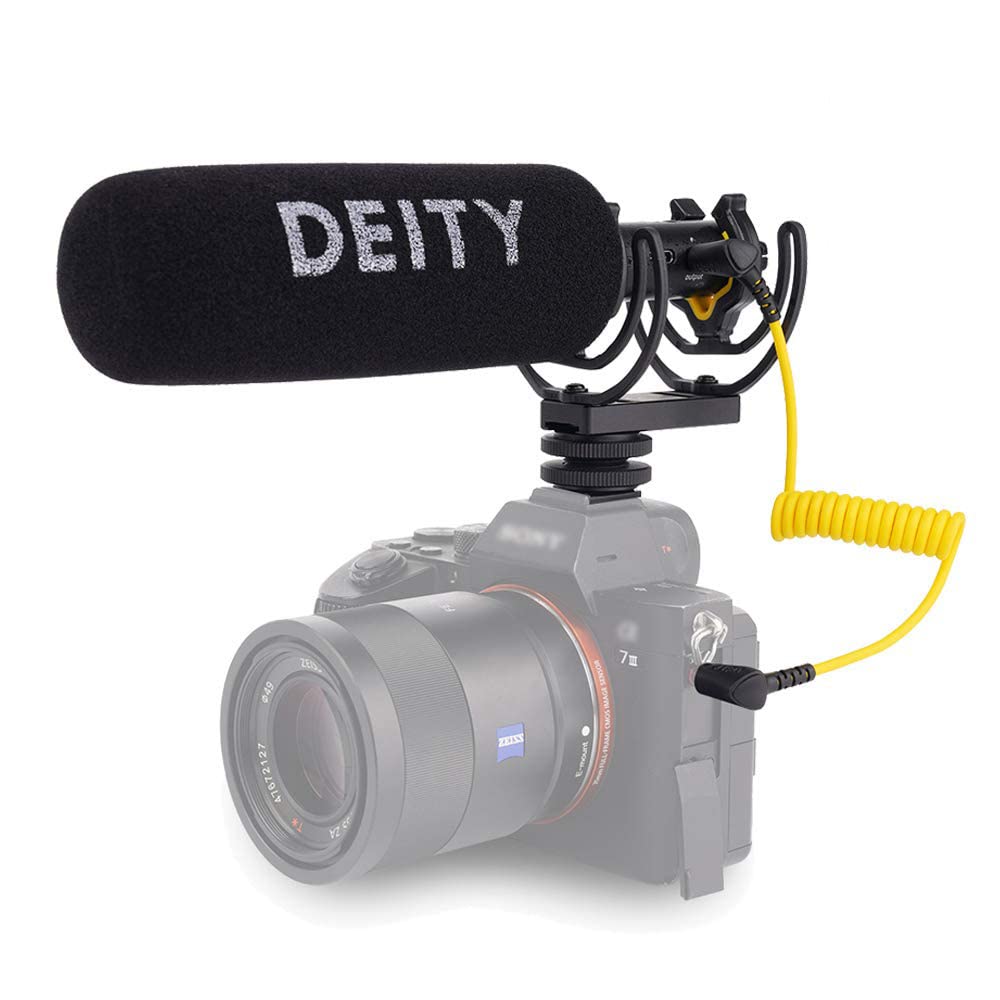
The D3 Pro excels at battery management. It features a smart power-on/off function that syncs with your camera, so you never waste battery life between takes.
The sound profile is crisp with a slight boost in the high-mids, which helps dialogue punch through loud environments. The build quality is surprisingly premium for the price point.
Deity V-Mic D3 Pro
- Key Advantage: Intelligent auto-power functionality
- Specifications: 189mm length, 143g, 51-hour battery life
- Warranty / Support: 1-year limited warranty
What We Liked
- Long-lasting battery
- Excellent shock mount
Things to Consider
- Proprietary cable for charging
4. Audio-Technica AT875R

For those who already own an XLR-capable camera or interface, the AT875R is the undisputed value king. It is a true shotgun mic that ignores everything outside its narrow pickup pattern.
It is incredibly compact, making it ideal for gimbal setups where weight is a critical factor. The audio is transparent and lacks the artificial color found in cheaper alternatives.
Audio-Technica AT875R
- Key Advantage: Extremely compact and lightweight
- Specifications: 175mm length, 80g, XLR connection
- Warranty / Support: 1-year warranty
What We Liked
- Professional XLR audio quality
- Very lightweight
Things to Consider
- Requires phantom power
5. Shure VP83 LensHopper

The VP83 is built like a tank. If you are a run-and-gun filmmaker who constantly travels, this mic is designed to survive the bumps and drops of daily life.
The audio performance is very natural, emphasizing accurate vocal reproduction. The integrated Rycote Lyre shock mount is one of the best in the business, effectively eliminating handling noise.
Shure VP83 LensHopper
- Key Advantage: Industrial-grade durability
- Specifications: 130 hours battery life, AA power
- Warranty / Support: 2-year warranty
What We Liked
- Rugged build quality
- Excellent shock mounting
Things to Consider
- Larger size profile
6. Rode VideoMic Pro+

The VideoMic Pro+ is a staple for a reason. It offers a user-friendly interface with dedicated buttons for high-pass filters and high-frequency boosts.
The included rechargeable lithium-ion battery provides a massive power boost over AA models. It is a reliable, set-it-and-forget-it workhorse for most creators.
Rode VideoMic Pro+
- Key Advantage: Rechargeable battery system
- Specifications: 170mm length, 122g
- Warranty / Support: 1-year warranty
What We Liked
- Easy-to-use controls
- Long battery life
Things to Consider
- Premium pricing
7. Movo VXR10 Pro

For those starting out, the VXR10 Pro delivers surprisingly clean audio at a fraction of the cost of premium brands. It is small, lightweight, and requires no batteries.
It works perfectly with smartphones and mirrorless cameras. While it lacks the advanced noise-rejection tech of more expensive models, it is a massive upgrade over built-in camera mics.
Movo VXR10 Pro
- Key Advantage: Extreme portability and price
- Specifications: 90mm length, 70g
- Warranty / Support: 1-year warranty
What We Liked
- Incredible price
- No batteries required
Things to Consider
- Lower sensitivity than pro models
How to Choose the Best Shotgun Microphone for Your Needs
Selecting the right microphone depends on your camera setup and the environments you film in. Consider these three factors.
1. Power Source: Decide if you need a battery-powered mic for DSLR use or a phantom-powered XLR mic for professional interfaces. Battery-powered mics are more convenient for run-and-gun work.
2. Polar Pattern: Shotgun mics use a supercardioid or lobar pattern. The tighter the pattern, the better the background noise rejection, but the more precise you must be when aiming at your subject.
3. Size and Weight: If you use a gimbal, every gram matters. Choose a compact shotgun mic to avoid balancing issues that can ruin your stabilized shots.
ðŸ'¡ Pro Buying Tip: Always invest in a high-quality deadcat (windjammer) if you plan to shoot outdoors. Even the most expensive microphone will struggle with wind noise without proper physical protection.


