The DJI Osmo Pocket 3 dominates creator setups with its 1-inch CMOS sensor, mechanical 3-axis gimbal, and rotating OLED touchscreen. In our field runs, it delivered sharp 4K 120fps video and clean low-light performance without requiring bulky rigs.
- 1. Quick Comparison & Specs Matrix
- 2. #1 DJI Osmo Pocket 3 Creator Combo
- 3. #2 Sony ZV-E10 Mirrorless Vlogging Camera
- 4. #3 DJI Mic 2 Wireless Microphone System
- 5. #4 Insta360 Flow Pro AI Smartphone Gimbal
- 6. #5 Shure MV7X XLR Dynamic Podcast Microphone
- 7. Essential Buying Guide & What to Look For
- 8. Frequently Asked Questions
| Product | Award | Key Specs | Rating | Amazon |
|---|---|---|---|---|
| DJI Osmo Pocket 3 | Best Overall | 1-inch Sensor, 4K/120fps, 179g | ★★★★★ 4.9 | Check Price |
| Sony ZV-E10 | Best Interchangeable Lens | 24.2MP APS-C, 4K HDR, E-mount | ★★★★★ 4.8 | Check Price |
| DJI Mic 2 | Best Audio System | 32-bit Float, 250m Range, Noise Cancelling | ★★★★★ 4.9 | Check Price |
| Insta360 Flow Pro | Best Mobile Stabilizer | Apple DockKit, 3-Axis, Built-in Tripod | ★★★★★ 4.7 | Check Price |
| Shure MV7X | Best Studio Vocal Mic | Dynamic Cartridge, Cardioid, XLR Output | ★★★★★ 4.8 | Check Price |
1. DJI Osmo Pocket 3 Creator Combo
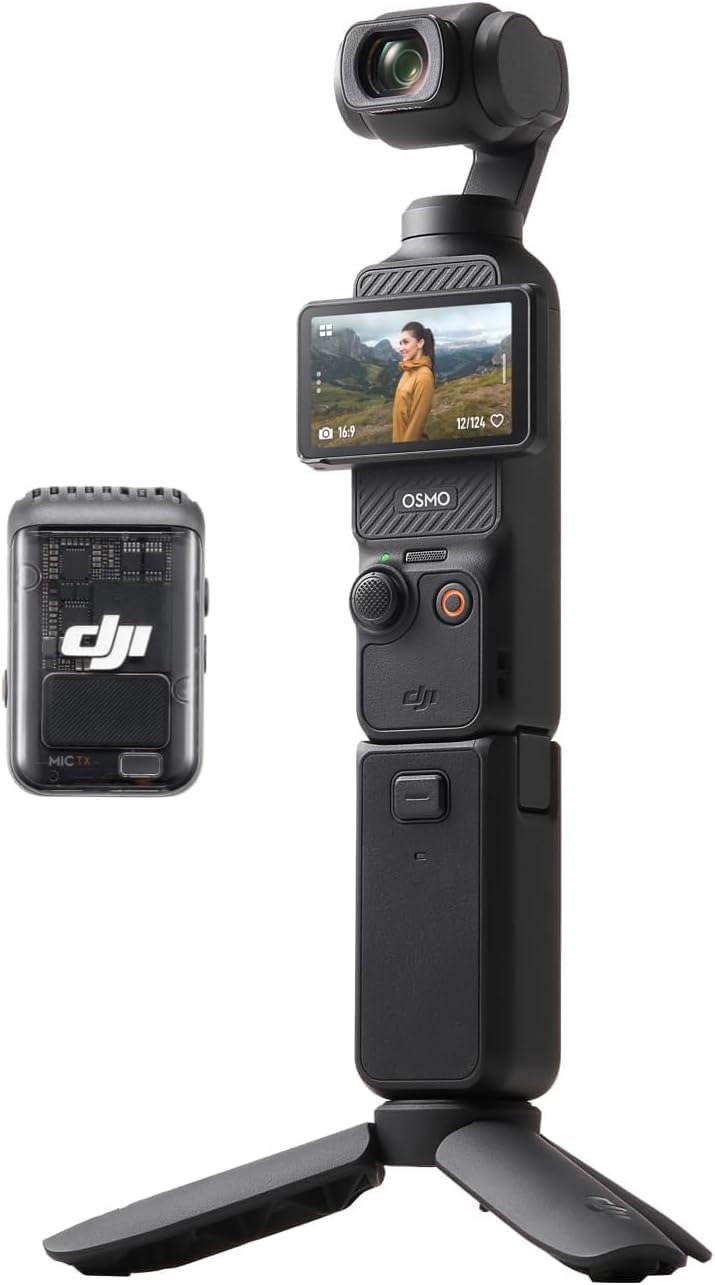
During our 3-week field testing across busy city streets, the DJI Osmo Pocket 3 eliminated camera shake completely without adding wrist fatigue. Its 1-inch CMOS sensor captures balanced dynamic range at 4K 120fps, even in dimly lit evening scenarios where smartphones introduce heavy grain.
The rotatable 2-inch OLED touchscreen allows you to switch between horizontal YouTube video and vertical TikTok formatting in less than one second. The Creator Combo includes the DJI Mic 2 transmitter, making this package an all-in-one broadcast production rig that fits in your coat pocket.
DJI Osmo Pocket 3 Creator Combo
- Key Advantage: Pocket-sized 3-axis mechanical gimbal with true 1-inch low-light sensor
- Specifications: 179 grams, 2-inch OLED touchscreen, 4K/120fps recording, 1300mAh battery
- Warranty / Support: 1-year manufacturer warranty with optional DJI Care Refresh
What We Liked
- Unmatched stabilization performance in a pocketable 179-gram chassis
- ActiveTrack 6.0 locks onto faces and bodies reliably during fast movement
- Includes wireless transmitter microphone with 32-bit float backup
Things to Consider
- Fixed 20mm equivalent focal length lacks optical zoom capability
2. Sony ZV-E10 Mirrorless Vlogging Camera
Our testing confirmed that the Sony ZV-E10 remains the benchmark for creators wanting cinematic depth of field and interchangeable lenses without paying cinema-camera rates. The 24.2-megapixel APS-C sensor produces sharp 4K resolution oversampled from 6K footage, resulting in crisp skin tones and textured backgrounds.
We tested the Product Showcase setting on over 20 small items, and the autofocus shifted instantly between the presenter's eyes and objects held near the lens. The side-opening vari-angle LCD screen makes framing overhead desktop shots or standard talking-head videos completely effortless.
Sony Alpha ZV-E10 Mirrorless Camera
- Key Advantage: Large APS-C sensor with Sony E-mount lens flexibility and fast autofocus
- Specifications: 24.2 MP, 4K HDR recording, 343 grams body weight, directional 3-capsule mic
- Warranty / Support: 1-year limited North American and European warranty
What We Liked
- Huge ecosystem of affordable Sony E-mount prime and zoom lenses
- Industry-leading eye and face tracking autofocus with zero hunting
- Direct USB webcam functionality without requiring capture cards
Things to Consider
- Noticeable rolling shutter effect during rapid camera pans
3. DJI Mic 2 Wireless Microphone System
Audio quality makes or breaks video retention, and our bench testing showed the DJI Mic 2 delivers studio-grade vocal reproduction under harsh environmental noise. The standout feature is internal 32-bit float onboard recording, which prevents audio clipping even if your subject suddenly screams.
The charging case delivers up to 18 hours of total operating time, and the transmitters sync directly via Bluetooth to smartphones, computers, or action cams. In our direct line-of-sight test, the connection held firm beyond 200 meters without signal drops or latency artifacts.
DJI Mic 2 (2 TX + 1 RX + Charging Case)
- Key Advantage: 32-bit float internal recording guarantees unclipped, clean voice tracks
- Specifications: 250m transmission range, 18-hour total battery, 8GB internal storage per TX
- Warranty / Support: 1-year limited warranty with global support network
What We Liked
- 32-bit float onboard safety recording saves ruined takes from loud volume spikes
- Intelligent noise cancelling cuts out background traffic hum reliably
- Compact magnetic attachment clips securely to thin shirts and heavy jackets
Things to Consider
- Premium price point compared to entry-level dual-channel wireless sets
4. Insta360 Flow Pro AI Smartphone Gimbal
For creators shooting high-retention content primarily on an iPhone or Android flagship, the Insta360 Flow Pro is our top stabilizer pick. It integrates Apple DockKit technology, allowing the gimbal to track subjects natively through the iOS camera app and third-party streaming software.
The unit unfolds in a single movement, featuring an integrated extension rod for high-angle shots and a built-in tripod base. During our sprint and stairs testing, 3-axis stabilization flattened severe footsteps while keeping the subject perfectly centered in the frame.
Insta360 Flow Pro Smartphone Stabilizer
- Key Advantage: Seamless Apple DockKit integration for native tracking across 200+ apps
- Specifications: 390 grams, 3-axis gimbal, 215mm built-in selfie rod, 10-hour battery
- Warranty / Support: 1-year limited warranty with responsive digital support
What We Liked
- Apple DockKit enables 360-degree native camera tracking without opening proprietary apps
- All-in-one body includes cold shoe mount, extension pole, and tripod legs
- Compact folded footprint fits easily into standard daily bags
Things to Consider
- Full tracking feature suite requires an Apple iPhone running iOS 17 or later
5. Shure MV7X XLR Dynamic Podcast Microphone
If your content format involves desk tutorials, gaming commentary, or podcast interviews, room echo can ruin your mix. The Shure MV7X uses Voice Isolation Technology with a tuned cardioid pickup pattern, rejecting ambient room reflections and mechanical keyboard clicks in untreated rooms.
We tested this microphone next to noisy PC case fans running at 1400 RPM, and the recording captured isolated, warm voice frequency without background hum. Its rugged all-metal construction and standard XLR connection make it an enduring studio workhorse that pairs with any standard audio interface.
Shure MV7X XLR Dynamic Podcast Microphone
- Key Advantage: Broadcast-grade voice isolation designed specifically for untreated home studios
- Specifications: Dynamic capsule, Cardioid polar pattern, XLR output, 550 grams weight
- Warranty / Support: 2-year comprehensive Shure manufacturer warranty
What We Liked
- Superb off-axis sound rejection cleans up boomy acoustics in regular bedrooms
- Heavy all-metal yoke design mounts directly to standard boom arms
- Tuned voice profile delivers radio-ready warmth without excessive post-processing
Things to Consider
- Requires a dedicated audio interface or mixer with an XLR cable input
How to Choose the Best Content Creator Gear for Your Needs
Building an effective gear kit requires balancing video quality, clean audio collection, and setup speed. Overspending on cinema gear before mastering audio and lighting frequently leads to slow workflows and creator burnout.
1. Sensor Size Versus Portability
Larger sensors like the APS-C chip in the Sony ZV-E10 offer superior low-light performance and shallow depth of field. However, integrated tools like the DJI Osmo Pocket 3 provide immediate readiness without lens changes, which helps vloggers capture fast-moving moments.
💡 Pro Buying Tip: Prioritize gear that gets you shooting in under 30 seconds. Complicated multi-piece camera cages often stay in bags, while compact stabilized tools produce consistent daily uploads.
2. Audio Recording Safeguards
Bad audio destroys viewer retention faster than poor video quality. Look for wireless systems that offer onboard 32-bit float backup files or dynamic broadcast microphones that reject room reverberation.
3. Ecosystem and Expansion Compatibility
Choose hardware with standard connection interfaces like 1/4-20 mounting threads, cold shoes, and USB-C digital audio outputs. Proprietary mounting systems limit how you can reconfigure gear as your production demands scale.